

Global Classroom Connect Logo

Global Classroom Connect Lesson Plan

Global Classroom Connect » Lessons » Thank You Umo / Last Stop on Market Street / Panya’s Pancakes – SDG 2: Zero Hunger

Thank You Umo / Last Stop on Market Street / Panya’s Pancakes – SDG 2: Zero Hunger

Author: Roxana Stenglr, Stephanie Tutunjian
Grade Level(s): 3-5 | K-2

Lesson Objective

Students will be able to identify SDG 2 as it relates to the three books in this lesson. They will also explain the Global Competency Indicators that might help them take action.

Overview

Students engage with three picture books about community and sharing by completing pre-reading predictions, guided reading reflections (on illustrations, characters, and problem-solving), and post-reading connections to Sustainable Development Goal #2 Zero Hunger and global competency indicators. After reading all three, students create a foldable book with brief summaries. They will then design a cover that represents a shared theme across the stories, such as community, empathy, or helping others.

Preparation

Students should already have been introduced to the SDGs and be familiar with the domains

(For each of the three picture books, do pre-reading / reading / post-reading steps)


Pre-Reading (10 minutes)

  1. Reflect on the title – What is the title of the story?
  2. Predict what might happen – What do you think the book will be about based on the title and cover?
  3. If you feel like your students need it, frontload the vocabulary (list in resource section)

Reading (20 minutes)

  1. Reflect on the illustrations – What do you notice about the pages? How do you think it’s made?
  2. Reflect on the characters – Who are the main characters and what do you know about them?
  3. Reflect on plot – Who are the main characters and what do you know about them? What indicators are they utilizing to address ‘the problem’ in the story?  How do they manifest the indicators you identified?

Post Reading  (10 minutes)

  1. Reflect on the conclusion – Was the end what you expected?
  2. Reflect on the SDG’s – What sustainable Development Goal(s) best reflect(s) the theme of this story? What evidence from the story supports the goal you selected?
  3. Reflect on the Indicators – What indicators did the characters use to solve the ‘problem’ in the story?

After reading each book, students will individually create a page in the foldable book of a one to two sentence summary on the book read. After all three books have been read, students will design the book cover and the book back with a theme used across all three books. The cover should not have “Zero Hunger” as a title


Sustainable Development Goals

Sustainable Development Goal

  • 2: Zero Hunger – End hunger, achieve food security and improved nutrition and promote sustainable agriculture
  • Target 12.1 – Universal Access to Safe and Nutritious Food: By 2030, end hunger and ensure access by all people, in particular the poor and people in vulnerable situations, including infants, to safe, nutritious and sufficient food all year round.

Global Competency Indicators:

  • Perspective-taking
  • Empathy
  • Collaboration
  • Taking informed action


Standards

Reading Literature (RL)

  • K–2 RL.1: Ask/answer questions about key details
  • K–2 RL.2: Retell stories; identify central message/lesson
  • K–2 RL.3: Describe characters, settings, major events
  • 1–2 RL.7: Use illustrations to understand story details

Speaking & Listening (SL)

  • K–2 SL.1: Participate in collaborative discussions
  • K–2 SL.2: Confirm understanding of read-alouds
  • K–2 SL.4: Describe ideas and feelings clearly

Writing (W)

  • K–2 W.2: Write informative/explanatory texts
  • K–2 W.3: Write narratives (sequence of events)
  • K–2 W.8: Recall information from texts


Materials

Materials:

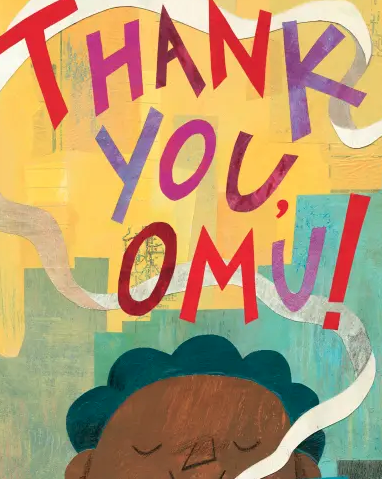
  • Thank You, Omu! by Oge Mora (coming together as a community to share food)
  • Last Stop on Market Street by Matt dela Pea
  • Mama Panya’s Pancakes: A Village from Kenya by Mary and Rich Chamberlin
  • SDG – either cards, poster, jpeg
  • Indicators – either cards, poster, jpeg
  • large piece of paper (enough for each student) to make foldable book
  • pencils, enough for each student
  • Lined paper, enough for each pair – students will use this to write their written draft before being checked by teacher
    • Alternatively, students can make a google doc with their written response, have
  • Lined paper
  • Glue, enough for each student
  • Old books, maps, magazines, scrapbook paper, colored construction paper
    • Suggestion: Prepare this before the lesson by cutting out clippings from the above paper materials. Each pair can get a small stack of materials to use
  • Scissors, enough for each student
  • Examples of taking action (The Global Goals – Things to Do)
  • Share book backmatter
    • Author’s note – definition of “Omu”, inspiration behind story
    • About this book – how illustrations were made and materials used

Emerging Bilinguals

  • Last Stop on Market Stop vocabulary list
  • Mama Panya’s Pancakes vocabulary list
    • Note: Backmatter has animals seen on walk to market, village life in Kenya, facts about Kenya, Kiswahili greeting glossary, pancake recipe
    • dousing
    • dollop
  • Thank You, Omu! vocabulary list in English/home language
    • Blue (emotion)
    • Nodded
    • Omu
    • Scrumptious
    • Vendor
    • Wafted